.png "Operation Jump")
Can You Put a Water Slide on Grass, Concrete or a Driveway?
You've picked the perfect water slide for your backyard party, but now you're staring at your space wondering if the setup will actually work. Maybe your yard slopes a bit, or you're thinking about using the driveway because it's the only flat spot.
The good news: inflatable water slides can go on grass, concrete, asphalt, and even slight inclines with the right preparation. The surface matters, but it's rarely a dealbreaker.
Here's what actually determines where your water slide can safely go, what makes each surface work differently, and how to prepare your space so the setup goes smoothly.
Quick Navigation
Which Type of Surface Are You Working With?
Before you worry about whether your space will work, identify what you're actually dealing with. Most Austin-area backyards fall into one of these categories:
🌱 Grass Yard
You have: Natural lawn, possibly with some trees or sprinkler heads
Setup method: Metal stakes anchor directly into the ground
Best for: Most inflatable water slides — this is the default setup surface
🏠 Concrete or Asphalt
You have: Driveway, patio, basketball court, or parking area
Setup method: Sandbags or water weights instead of stakes; protective tarps underneath
Best for: Larger units or when grass isn't available or level enough
🏞️ Mixed or Sloped Terrain
You have: Yard with noticeable incline, partially paved areas, or uneven patches
Setup method: Combination anchoring; possible repositioning during delivery
Best for: Smaller to mid-size slides; delivery teams assess on arrival
Most spaces work with a little preparation. The question isn't whether the slide can go there — it's about making sure it's anchored safely and won't wear unevenly.
Grass Setup: The Most Common Option
If you have a lawn — even one that's seen better days — grass is usually the easiest and safest surface for inflatable water slides.
The grass cushions the bottom of the inflatable, allows for secure staking, and handles water runoff naturally. Plus, kids running barefoot on grass between slides don't slip as easily as they would on concrete.
What Makes Grass Work Well
- Anchoring is simple: Metal stakes (usually 12-18 inches) go straight into the ground at each tie-down point
- The vinyl bottom is protected: Grass prevents friction wear that can happen on rough pavement
- Water drains naturally: Splashing and runoff soak into the lawn instead of pooling
- The surface gives slightly: Landings feel softer, especially for younger kids
💡 Pro Tip: You don't need a perfect lawn. As long as the grass is relatively level and free of sharp objects (sticks, rocks, broken sprinkler heads), it'll work fine. A few weeds or brown patches won't affect the setup.
Things to Check Before the Delivery Team Arrives
Walk the area where the slide will go and look for:
- Sprinkler heads or irrigation lines near the surface (mark them if needed)
- Rocks, sticks, pine cones, or anything that could puncture the vinyl
- Dog waste (seriously — clean it up before setup)
- Low tree branches that might interfere with the slide's height
- Fire ant mounds (common in Central Texas — treat them a day or two ahead)
The delivery team will do a final walk-through, but clearing obvious hazards ahead of time makes setup faster and protects the equipment.
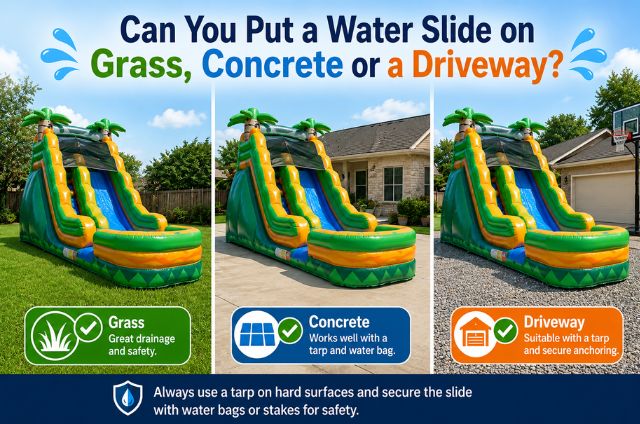
What Happens to Your Grass?
Let's be honest: the grass under a water slide won't look great afterward. You'll see some flattening and possible yellowing where the inflatable sat for several hours, especially on a hot Central Texas day.
The good news? It bounces back. Water the area regularly for a few days, and the grass usually recovers within a week or two. If it's dormant (common in Texas summers), you might not notice much difference.
The stake holes are small — about the diameter of a pencil — and fill in quickly with normal watering and mowing.
Concrete and Driveway Setup
Hard surfaces like concrete, asphalt, or pavers work perfectly well for water slides — sometimes even better than grass.
The advantages: The surface is already level, drainage is predictable, and there's no worry about sprinkler lines or uneven ground. Water runs off cleanly, and you don't have to mow around flattened grass afterward.
The setup just requires a different anchoring method and protective layers underneath.
How Anchoring Works Without Stakes
Since you can't drive stakes into concrete, the rental company uses sandbags or water-filled weights at each tie-down point. These provide the same stability as ground stakes when properly positioned.
A typical mid-size water slide requires 4-8 anchor points, each secured with 30-50 pounds of weight. Larger units or windier conditions may need more.
⚠️ Important: Sandbag anchoring requires calm to moderate wind conditions. If gusts are forecast above 15-20 mph on event day, the delivery team may recommend rescheduling or repositioning the slide to a more sheltered spot. Safety always comes first.
Protecting the Inflatable (and Your Driveway)
Concrete is harder than grass, which means friction and heat become factors. The rental company will place a protective tarp or pad underneath the slide to:
- Prevent vinyl wear from rough pavement texture
- Reduce heat transfer (concrete gets hot in Texas sun)
- Protect your driveway from scuff marks or water staining
- Create a slight cushion for landing areas
This is standard practice for hard-surface setups — you don't need to provide anything extra.
When Concrete Makes More Sense Than Grass
Some situations actually favor hard surfaces:
- Your yard has a noticeable slope but the driveway is level
- You're hosting a large event and the lawn would get trampled anyway
- Recent rain made the grass too soft for stable staking
- You need easy hose access and your outdoor spigot is near the driveway
- The event is in winter when Texas grass is dormant or muddy
There's no rule that says grass is always better. The right surface is whichever one gives you safe, level placement with good drainage.
What About Slopes and Uneven Ground?
Very few yards are perfectly flat. A gentle slope usually isn't a problem — most water slides can handle a grade of 3-5 degrees without issue.
Here's what happens when the ground isn't level:
⬆️ Problems When the Slope Is Too Steep
- Water pools at the low end instead of draining evenly
- Kids slide faster than intended (can feel unsafe)
- The inflatable may lean or shift during use
- Anchoring becomes less stable
- Uneven wear on the bottom of the slide
⬇️ What the Delivery Team Can Do
- Reposition the slide to find the flattest area
- Orient the unit so the slope works with the design
- Use leveling blocks or pads under one side (for minor slopes)
- Recommend a smaller unit if the original won't fit safely
- Suggest the driveway or patio as an alternative surface
When you book, mention if your yard has noticeable slopes. That gives the team a heads-up and helps them plan the best placement during delivery. Most of the time, they can work with it — they've seen every kind of Texas backyard. Read our water slide guide for more helpful tips.
💡 Quick Test: Stand where you're thinking about placing the slide and roll a ball. If it moves slowly or stays put, you're probably fine. If it rolls quickly away, that's a sign the slope might need addressing.
Bumps, Dips, and Uneven Patches
Small variations in the ground — a little dip here, a slight hump there — usually don't matter. The inflatable is designed to conform to minor irregularities.
What does matter:
- Sharp drop-offs or edges (like a retaining wall)
- Large rocks or tree roots sticking up
- Drainage ditches or low spots that collect standing water
- Recently dug areas that haven't settled yet
If you're unsure whether your yard will work, a quick phone call or photo sent to the rental company can answer the question before booking.
Surface-by-Surface Breakdown
Here's how each common surface type stacks up for water slide setup:
Natural Grass
✓ Pros:
- Easiest anchoring with stakes
- Natural drainage
- Softer surface for barefoot traffic
- Reduces vinyl wear
✗ Challenges:
- May show flattening afterward
- Needs debris clearance first
- Can be uneven in some yards
Concrete / Asphalt
✓ Pros:
- Already level
- Predictable water runoff
- No grass damage
- Works well in any season
✗ Challenges:
- Requires sandbag anchoring
- Needs protective padding underneath
- Gets hot in direct sun
- Less forgiving if kids fall
Pavers / Patio Blocks
✓ Pros:
- Usually level and stable
- Looks nice for event photos
- Good drainage between pavers
✗ Challenges:
- Requires sandbag anchoring
- Uneven pavers can create bumps
- Needs protective layer
- Sand joints can shift slightly
Artificial Turf
✓ Pros:
- Stakes work if installed on soil base
- No grass damage to worry about
- Drains well if properly installed
✗ Challenges:
- Can get very hot in sun
- Some types show stake marks
- May need sandbags if on hard base
Dirt / Decomposed Granite
✓ Pros:
- Stakes anchor easily
- Works if packed firm
- Often already level
✗ Challenges:
- Can become muddy when wet
- Dust when dry
- Rough texture needs extra padding
- Drainage issues if not graded
Mixed Surfaces
✓ Pros:
- Gives more placement options
- Can use hybrid anchoring methods
✗ Challenges:
- Requires custom setup approach
- May need repositioning during delivery
- Less predictable drainage
The "best" surface is the one that's level, clear of hazards, and accessible for the delivery team. Everything else can be worked around.
How to Prepare Your Space Before Delivery
You don't need to do major landscaping, but a little prep makes setup faster and protects the equipment. Here's a simple checklist that works for any surface:
Pre-Delivery Checklist
Clear the Area
- Remove toys, furniture, grills, planters — anything in the footprint
- Trim low branches that could interfere with the slide height
- Move vehicles if using the driveway
Check for Hazards
- Walk the area and pick up sticks, rocks, sharp objects
- Mark sprinkler heads with small flags if they're close to the setup zone
- Check for fire ant mounds and treat them 24-48 hours ahead
- Look for broken glass, nails, or anything that could puncture vinyl
Measure and Confirm Space
- Verify you have the recommended clearance (length + 5-6 feet at each end)
- Check overhead clearance for tree branches or power lines
- Make sure the delivery team can access the area with equipment
Water Source
- Have a garden hose that reaches the setup area (50-75 feet usually works)
- Make sure the outdoor spigot works and isn't stuck from disuse
- If using a timer or splitter, test it beforehand
Power Access (if needed)
- Inflatable slides need continuous power for the blower
- Standard 110V outdoor outlet within 75-100 feet
- Make sure the circuit can handle it (avoid running through a multi-plug adapter)
If you're short on time, focus on clearing the area and picking up sharp objects. The delivery team can work around most other things — they just appreciate a heads-up if there are specific quirks about your yard.
🚨 Non-Negotiable: If you have a dog, keep the area clean and check for waste on delivery day. It's not just unpleasant — it can contaminate the slide surface and create a safety issue for kids.
What the Rental Company Provides
You don't need to supply anchoring equipment, tarps, or protective layers. The rental company brings everything needed for safe setup on your specific surface type.
What's Included With Every Water Slide Rental
- Anchoring gear: Stakes for grass, sandbags or weights for hard surfaces
- Protective ground tarps: Placed under the slide on concrete, asphalt, or rough terrain
- Blower and power cord: Keeps the slide inflated continuously during your event
- Setup and takedown: The delivery team handles positioning, anchoring, and final checks
- Safety walkthrough: They'll explain operation, show you the shut-off, and answer questions
All you provide is the space, water source, and power outlet. Everything else is part of the rental.
💡 Worth Knowing: If your yard requires extra anchoring due to wind, slopes, or unique challenges, the delivery team will handle it on-site. They carry backup sandbags and additional stakes for exactly these situations. You won't be charged extra for standard setup adjustments.
Common Questions About Water Slide Setup Surfaces
Can I set up a water slide on artificial turf?
Yes, as long as the turf is installed over a soil or gravel base that allows stakes to anchor. If it's over concrete or a hard base, you'll need sandbag anchoring instead. The main concern with artificial turf is heat — it can get significantly hotter than natural grass in direct sun, so plan for shade or run the water earlier to cool it down.
What if my yard is mostly dirt or gravel?
Packed dirt or decomposed granite works fine for water slides. Stakes anchor well, and the surface is usually level. The delivery team will place a protective tarp underneath to prevent dust and provide a smoother base. The main thing to watch is drainage — if the area tends to puddle after watering, you may want to position the slide where runoff naturally flows away.
Can you put a water slide on a pool deck?
Pool decks work well because they're already designed for water and usually have good drainage. Since the surface is hard (concrete, pavers, or stone), setup uses sandbag anchoring and protective padding. The bonus is you're already poolside, so water access is easy and kids can move between the slide and pool. Just make sure there's enough clearance from the pool edge for safe landing zones.
How much slope is too much for a water slide?
Generally, a slope of more than 5-6 degrees (about 1 foot of drop per 10 feet of length) becomes difficult to work with. The slide may lean, water won't distribute evenly, and kids might slide faster than intended. If your yard has a noticeable slope, the delivery team can assess it on arrival and suggest repositioning or using a smaller unit that fits a flatter section. When in doubt, send a photo when you book — it helps everyone plan better.
Do I need to worry about underground sprinklers?
Stakes go about 12-18 inches deep, so they can potentially hit shallow sprinkler lines or heads. If you know where your irrigation lines run, mark them with small flags or let the delivery team know before setup. In most cases, they can position stakes between heads or shift the slide slightly. If staking isn't safe in that area, they'll use sandbags instead. It's better to mention it upfront than discover a leak mid-party.
Can a water slide be set up in a park or community area?
Yes, parks and community spaces often work great — they typically have large, flat grass areas. You'll need to confirm that the park allows inflatables (some require permits), and make sure there's power and water access nearby. Many community centers in the Austin area have outlets and hose hookups available for events. The delivery team can adapt to most public spaces as long as they can drive equipment close enough for setup.
What happens if it rains before the event?
Rain doesn't usually stop a water slide event — it's already designed to get wet. The concern is if the ground becomes too soft or muddy for stable anchoring. On grass, stakes may not hold securely in saturated soil. If you've had heavy rain in the 24 hours before delivery, mention it when the team arrives. They can assess whether the ground is firm enough or whether repositioning to a drier area or using a hard surface makes more sense. In extreme cases, rescheduling may be the safest choice.
Will the water slide damage my driveway or patio?
No, the protective tarp placed underneath prevents scuffing and staining. Water runoff is temporary and won't damage sealed concrete or asphalt. If you have a decorative surface like stamped concrete or pavers, mention it when booking so the team can bring extra padding. The slide itself doesn't leave permanent marks — any wet spots dry within hours after takedown.
Ready to Book Your Water Slide?
Now that you know your space will work — whether it's grass, concrete, or somewhere in between — picking your water slide is the fun part.
Operation Jump delivers across Hutto, Pflugerville, Cedar Park, West Lake Hills, and the greater Austin area. We handle the setup, explain how everything works, and make sure your event runs smoothly from start to finish.
No pressure. No pitch. Just reliable service and equipment that shows up clean, on time, and ready to make your party memorable.
Or call 512-900-3499 if you have setup questions